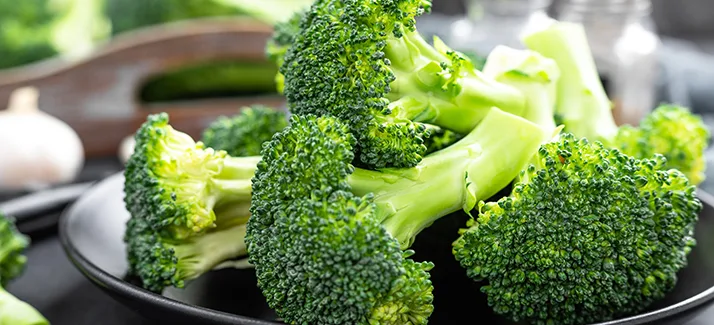
Sulforaphane is one of the reasons broccoli has attracted so much research interest. This sulphur-containing plant compound forms when broccoli is chopped or chewed, through a reaction involving substances already inside the vegetable. How you prepare it can affect how much forms and how much your body absorbs. [7]
You may have seen broccoli described as cancer-fighting, protective for the brain or a way to help your body detox. There is interesting research behind those headlines, although the studies ask quite different questions. I want to help you understand what they have found and how to use that information when making dinner.
You can start with ordinary broccoli, including an affordable frozen bag. There is no need to buy an expensive supplement or learn all the chemistry before adding more vegetables to your meals.
What is sulforaphane, and how does broccoli make it?
Sulforaphane belongs to a group of phytochemicals, or plant compounds, called isothiocyanates. Broccoli stores much of its potential sulforaphane as a precursor called glucoraphanin. A precursor is a substance used to make something else. [1]
| Name | What it means |
|---|---|
| Glucoraphanin | A sulphur-containing compound in broccoli, from the glucosinolate family. It provides the starting material. |
| Myrosinase | An enzyme that helps break down glucoraphanin when plant tissue is damaged. |
| Sulforaphane | A compound that can form from that breakdown reaction. |
Chopping and chewing bring the enzyme and its starting material together. Heat can inactivate myrosinase, so preparation changes the reaction. Some conversion can also happen through gut bacteria after you eat cooked vegetables. [1]
Researchers also study a protein called Nrf2, which helps regulate genes involved in the way cells respond to stress. Sulforaphane can influence this pathway. That helps explain the scientific interest, but changes in a cellular pathway do not automatically tell us whether eating a food prevents a disease. [10]
Which foods contain sulforaphane?
Broccoli and broccoli sprouts are the main foods discussed in sulforaphane research. Amounts vary with the variety, growing conditions, stage of growth and preparation. You cannot work out a precise dose just by looking at a floret. [6]
The wider cruciferous vegetable family includes Brussels sprouts, cabbage, cauliflower, kale, collard greens, bok choy, Chinese cabbage, kohlrabi, mustard greens, turnips, radishes and watercress. These foods contain different mixtures of glucosinolates. They do not all produce the same breakdown compounds or supply an equivalent amount of sulforaphane. [2]
I would use this as a reason to enjoy a wider choice of vegetables. If broccoli is not your favourite, try shredded cabbage in a salad or cauliflower in a curry. Variety gives you more flavours to work with, too.
How should I prepare broccoli?
Does chopping it before cooking help?
Giving chopped broccoli some time before cooking allows its enzyme to work before heat inactivates it. In a food laboratory study, leaving chopped broccoli for 90 minutes before stir-frying produced more sulforaphane than stir-frying it immediately. The researchers measured compounds in the food, rather than health outcomes in people. [3]
For an ordinary meal, you could chop the broccoli first, then prepare the remaining ingredients. The study does not establish that everyone needs to wait 90 minutes, or that a particular ten-minute wait guarantees a health benefit. I would not let a timer make cooking feel complicated.
Is steaming better than boiling?
Brief steaming can be useful if you want to preserve myrosinase activity. Research comparing broccoli varieties and cooking methods found that steaming favoured sulforaphane formation under the conditions tested. Results depend on the temperature, cooking time and broccoli itself, so there is no single method that guarantees an exact amount at home. [4]
Steam until the texture suits you. You can still use broccoli in soups, curries and stews; you do not need to eat every vegetable raw to make a worthwhile meal.
Why do people suggest adding mustard powder?
Mustard seeds can supply active myrosinase to cooked broccoli. In a small randomised crossover study, 12 adults ate cooked broccoli with or without powdered brown mustard. Adding mustard increased the amount of a sulforaphane breakdown product measured in urine. [5]
“the bioavailability of sulforaphane is over four times greater”
Okunade and colleagues, 2018, with added powdered mustard [5]
Bioavailability means how much becomes available to the body. This was an absorption study, so it does not show a fourfold improvement in health. If you enjoy mustard and can eat it safely, a little mustard powder added to cooked broccoli is an option to try. It is entirely optional.
Is frozen broccoli still useful?
Yes. Commercial blanching before freezing can reduce the activity of broccoli's own myrosinase, which is why frozen broccoli sometimes features in discussions about adding mustard. Dr Michael Greger explains this preparation approach in his NutritionFacts.org cooking article. The small human mustard study above provides the underlying evidence for improving absorption from cooked broccoli. [16]
Frozen vegetables also count towards your five a day. Keep using them if they help with cost, planning or food waste, and follow the cooking instructions on the packet. [17]
Are broccoli sprouts better than mature broccoli?
Young broccoli sprouts can contain concentrated amounts of glucoraphanin. The much-quoted 1997 paper by Fahey, Zhang and Talalay examined young sprouts, enzyme responses and a rat tumour model. It helped establish this field of research, but it was not a trial showing that people who eat sprouts avoid cancer. Concentrations also varied between the plants studied. [6]
A later human study by Shapiro and colleagues showed that preparation affected the absorption and excretion of broccoli-sprout compounds. Products containing the precursor and products containing its breakdown compounds behaved differently. This is useful research when interpreting supplement labels, although it did not measure long-term disease prevention. [7]
There is a food-safety consideration with sprouts. The warm, moist conditions used to grow them can also allow harmful bacteria to multiply. Broccoli sprouts are included in this concern. Pregnant people, young children, older adults and people with weakened immune systems should avoid raw or lightly cooked sprouts. Thorough cooking is the safer option; careful home growing cannot guarantee that sprouts are free of harmful bacteria. [8]
You can carry on enjoying mature broccoli if sprouts do not appeal to you. They are not an essential purchase for a plant-based kitchen.
What does the health research show?
Can broccoli or sulforaphane prevent cancer?
Laboratory and animal research has explored how sulforaphane affects enzymes involved in processing potentially harmful compounds, as well as processes linked to cancer development. Those findings provide reasons for further study. They do not establish sulforaphane as a cancer treatment or prove that a daily serving prevents cancer in people. [6] [9]
One of the original papers linked on this page followed 134,796 adults in Shanghai. Higher cruciferous vegetable intake was associated with lower overall and cardiovascular mortality, but not cancer mortality. Because it was an observational study, it could not establish cause and effect or identify sulforaphane as the reason for the association. [11]
That is encouraging research about a food group, with a different meaning from a claim that a broccoli extract will prevent disease. If you are receiving cancer treatment, discuss concentrated supplements with your treatment team.
What about the brain, memory and inflammation?
Two reviews in the research links below explore sulforaphane, Nrf2 and possible protection of brain cells. Much of this work comes from laboratory and animal experiments. It helps researchers understand possible mechanisms, while leaving questions about clinical benefits unanswered. [10] [12]
The broccoli-sprout study by Subedi and colleagues used cultured microglial cells, which are immune cells in the brain, and mice given a drug to impair memory. It was not a human dementia trial. Its findings about inflammatory responses and memory in that model cannot tell us that eating sprouts prevents Alzheimer's disease. [13]
Does it help the body deal with air pollution?
A 12-week randomised trial in 291 people in a heavily polluted region of China tested a broccoli-sprout beverage. Participants receiving the beverage excreted more urinary breakdown products associated with benzene and acrolein exposure. There was no significant effect for another compound studied, crotonaldehyde. [14]
The trial measured markers of chemical processing and excretion. It did not show that broccoli prevents pollution-related illness, protects against pesticides generally or makes exposure harmless. This is more specific than the word “detox” often suggests.
Why is sulforaphane mentioned in autism research?
A small 2014 trial in 44 adolescent and young adult males reported improvements in some behavioural ratings with a broccoli-sprout preparation. A later multicentre trial in 108 children found improvements in clinician ratings, but no significant differences in caregiver ratings between groups. [15] [18]
These trials tested particular preparations, with mixed results across assessments. They do not establish eating broccoli as an autism treatment. Families considering a supplement should discuss the individual product, evidence and safety with the child's clinician.
What else is in broccoli?
Sulforaphane is only one part of broccoli's chemistry. These other compounds are useful subjects to explore, without treating each one as a separate reason to buy a capsule.
| Compound or group | Why researchers are interested |
|---|---|
| Indole-3-carbinol | Another glucosinolate breakdown product, studied for effects on cell processes and hormone metabolism. It is chemically different from sulforaphane. [2] |
| Carotenoids | Include beta-carotene, which the body can convert to vitamin A, and lutein and zeaxanthin, which occur in the eye. These have different functions; the names are not interchangeable. [19] |
| Kaempferol and quercetin | Members of the flavonol group, studied for their effects on cell signalling and health. Findings about a concentrated preparation cannot automatically be applied to a serving of broccoli. Read more in the flavonoid guide. [20] |
How can I use broccoli in everyday meals?
I would start with something you already enjoy eating and find a place for broccoli in it. Planning the week's food and having the ingredients ready makes that much easier.
- Add steamed florets to noodles with tofu, ginger and a dressing you enjoy.
- Put broccoli into a chickpea curry, or serve it alongside a lentil dhal.
- Blend it into a soup with white beans, keeping some small florets for texture.
- Use the peeled, tender part of the stalk in a stir-fry or soup so more of the vegetable gets eaten.
These meals can be made without added oil. If you like mustard, you could include some mustard powder in a dressing for cooked broccoli. Start with a little and taste as you go.
Choose organic if that suits your preferences and budget. Ordinary fresh broccoli and frozen options are welcome here, too. I would rather help you find a meal you enjoy and can afford than make shopping feel like another hurdle.
Do I need a sulforaphane supplement?
You do not need one to include broccoli in your diet. Supplement labels may refer to sulforaphane, glucoraphanin, broccoli extract or myrosinase, and these describe different things. The human absorption research shows why the starting material and its conversion matter; the weight of an extract alone does not tell you how much sulforaphane becomes available. [7]
There is no established dietary sulforaphane target to build your meals around. Research doses should not be copied as a personal prescription. If you are considering a concentrated product for a health condition, ask a pharmacist or clinician about the specific preparation and your medicines. [1] [9]
For your next meal, you could simply chop the broccoli while you prepare the rest of dinner, cook it in a way you enjoy and serve it with beans, lentils or tofu. There is plenty of room to learn about the research as you go.