Tofu, soya beans and flaxseed often appear on lists of foods that are “high in oestrogen”. That wording can be confusing. These foods contain phytoestrogens: plant compounds that can interact with some of the same receptors as our own oestrogen. Eating them is different from taking the hormone itself. [1][2]
If you are wondering what to put on your plate, or whether soya might help with hot flushes, there is useful research to explore. I would start with familiar food and a few questions: which compounds does it contain, what did the study actually test, and is the result something you can reasonably expect from dinner?
What are phytoestrogens?
The name means plant oestrogens. Their structures allow them, or substances made from them during digestion, to interact with oestrogen receptors. Receptors are proteins that receive chemical signals in cells. Effects depend on the particular compound and tissue; “balances your hormones” is too broad a promise. [1][2]
Two groups you will often meet in food research are isoflavones and lignans. Isoflavones include genistein and daidzein, found especially in soya foods. Lignans occur in seeds and other plant foods. Gut bacteria turn plant lignans into compounds called enterolignans, which researchers also study. [1][2]
Phytoestrogens sit within the much wider subject of phytochemicals. Our guides to polyphenols and flavonoids explain some of the related families.
Which foods contain phytoestrogens?
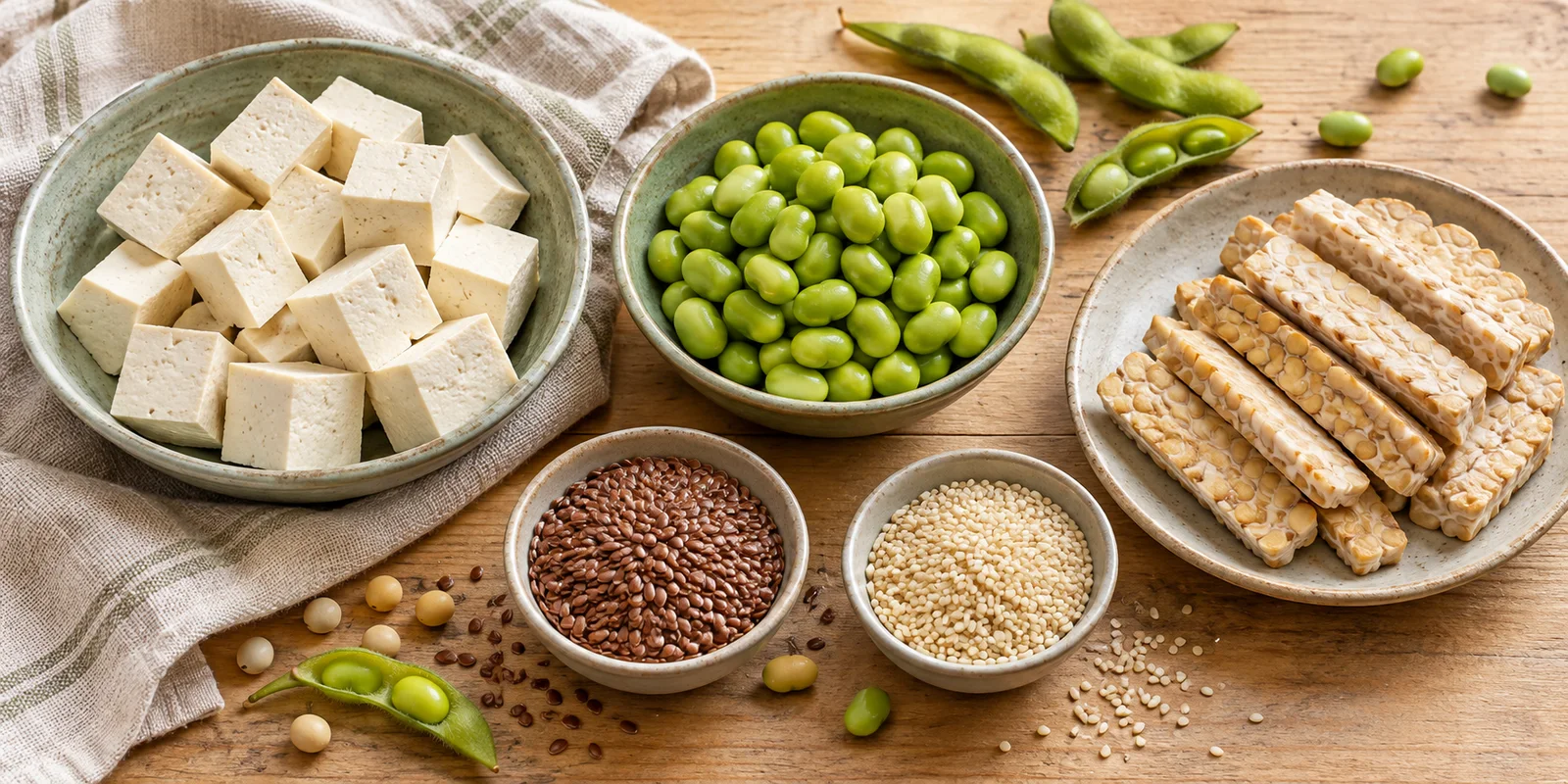
Soya beans and foods made from them are concentrated dietary sources of isoflavones. Flaxseed, also called linseed, is particularly rich in lignans. Sesame contains lignans too. Other beans, whole grains, fruit and vegetables contribute smaller amounts of various compounds. [1][2][3]
| Food | Compounds of interest | Try it in |
|---|---|---|
| Mature soya beans | Isoflavones | A bean salad, stew or grain bowl |
| Edamame | Isoflavones | Rice bowls or vegetable noodles |
| Tofu | Isoflavones | A scramble, curry or tray of baked vegetables |
| Tempeh | Isoflavones | Sandwiches, stir-fries or a warm salad |
| Soya drink or soya yoghurt | Isoflavones; amounts vary between products | Porridge or a bowl of fruit |
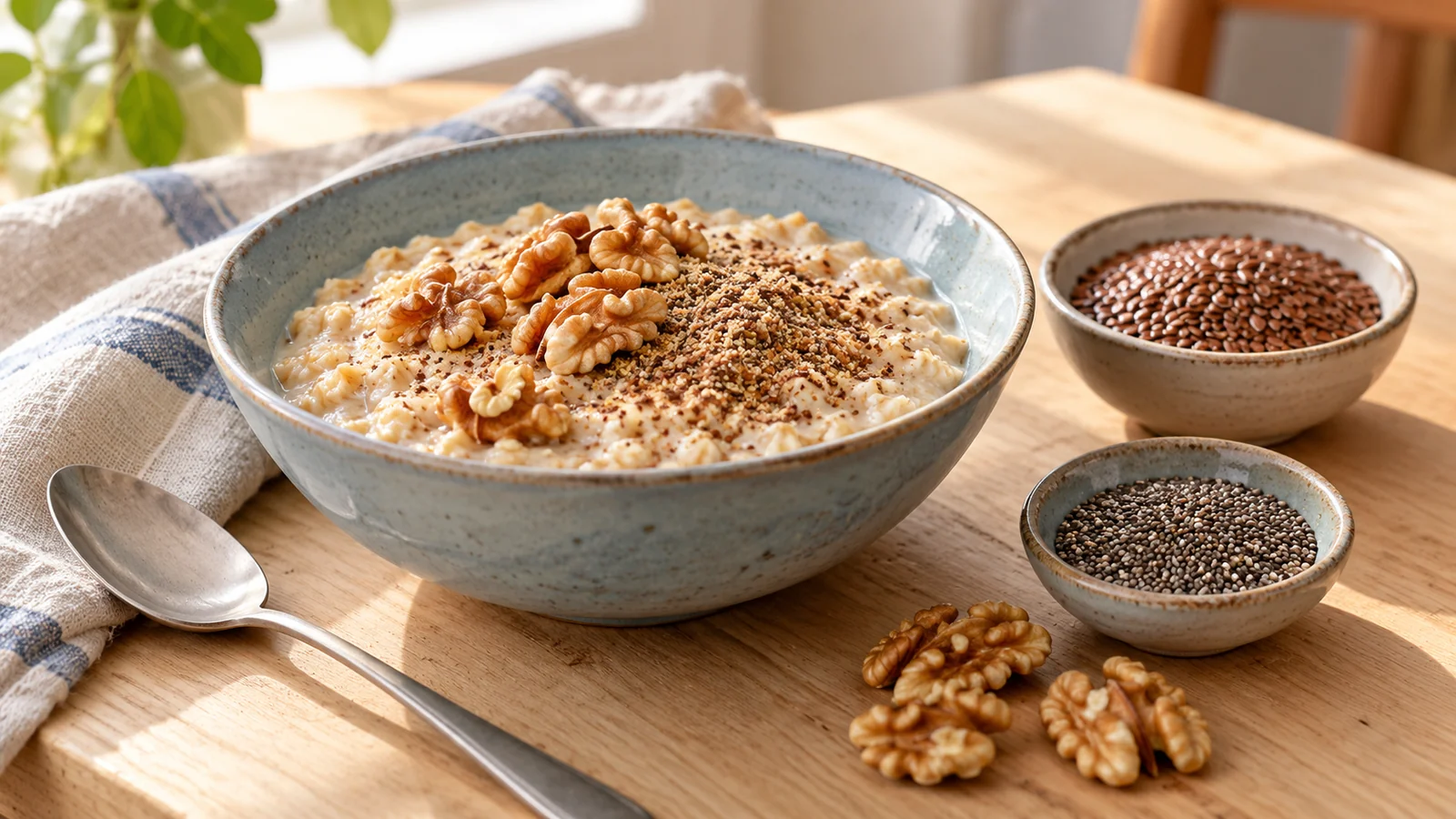
| Ground flaxseed | Lignans | Porridge, overnight oats or a smoothie |
| Sesame seeds and tahini | Lignans | Seed sprinkles or a lemon dressing |
| Whole grains, other pulses, fruit and vegetables | Smaller contributions of different phytoestrogens | Your usual mixed meals |
Food-source references: USDA, Linus Pauling Institute and British Nutrition Foundation. The serving ideas are suggestions for cooking, rather than amounts proven to treat symptoms. [17][2][3]
You may see exact milligram rankings online. The amount in a food varies with the variety, processing and product, so a number from one sample cannot describe every packet of tofu. Comparing isoflavone milligrams with lignan milligrams also does not tell you which food will have a stronger effect in your body. [1][2]
Chickpeas and lentils can stay on the menu, even though they are not interchangeable with soya in an isoflavone study. There is no need to make every ingredient compete for the highest phytoestrogen score. A lentil soup and a tofu curry can both earn a place because you enjoy them.
Do these foods increase your oestrogen?
They do not reliably work as an oestrogen top-up. A review of 47 studies found no statistically significant overall effect on circulating oestradiol or oestrone in either premenopausal or postmenopausal women. It did find changes in some other measures, including a small increase in menstrual cycle length before menopause. The clinical importance remained uncertain. [4]
That review is older, with studies searched to 2007, and does not settle every question about hormones or symptoms. It does show why “eat this to raise your oestrogen” is an unreliable instruction. An interaction with a receptor is different from a measured rise in the amount of hormone circulating in your blood. [4]
If you are concerned about hormonal symptoms, food lists cannot tell you their cause. A clinician can help you work out what is happening and whether you need assessment. You do not have to diagnose yourself before asking for help.
Can phytoestrogen foods help with menopause symptoms?
Some studies report improvements in hot flushes, while others find little benefit over a comparison treatment. The evidence is strongest for asking a careful question about particular soya interventions, rather than promising that all phytoestrogen foods relieve menopause symptoms. [3][5][6]
Dr Neal Barnard's plant-based diet and soya research
Dr Neal Barnard, Dr Hana Kahleova and colleagues tested a low-fat plant-based diet with half a cup of cooked mature soya beans daily. The full trial included 84 postmenopausal women, randomly allocated to the diet or to making no dietary changes for 12 weeks. Seventy-one completed the study. Moderate-to-severe hot flushes fell by 88% in the diet group and 34% in controls. [7]
“Because the study tested a combination intervention, the efficacy of its individual components was not assessed.”
Barnard and colleagues, Menopause, 2023. [7]
That is an encouraging result for the combined approach. It cannot establish how much benefit came from soya, changing the rest of the diet, weight loss or other factors. Participants knew their group and recorded their own symptoms. The trial was short and funded by the Physicians Committee for Responsible Medicine, whose researchers advocate plant-based eating. [7]
The earlier 2021 paper reports the first 38 participants from this programme. It is useful further reading, but it is included in the larger report, so these are not two independent trials confirming the same result. [8]
Why do other studies and guidance sound less certain?
A 2016 review of 62 trials found that phytoestrogen interventions were associated with a modest reduction in daily hot flushes. They did not significantly reduce night sweats overall. Most included trials had a high risk of bias in several areas, and the preparations differed. [9]
An earlier Cochrane review found no conclusive evidence that phytoestrogen supplements reduced hot flushes or night sweats, while identifying genistein concentrates as a topic for further study. Keep that distinction in mind: a supplement trial does not test the same thing as adding tofu to dinner. [5]
The Menopause Society's 2023 evidence review did not recommend soya foods, soya extracts or equol specifically as treatments for hot flushes because results were mixed and studies had limitations. This judgement concerns dependable symptom relief; it does not mean you need to avoid soya as food. [6]
I would keep the promising dietary trial in the conversation, alongside these broader reviews. If you enjoy soya, it can fit into everyday meals. Whether it helps your symptoms is less predictable, and continuing symptoms do not mean you have eaten badly or failed to try hard enough.
Does flaxseed help with hot flushes?
Being rich in lignans has not translated into consistent symptom relief. In a double-blind trial enrolling 188 women, a flaxseed bar providing 410 mg of lignans daily did not significantly outperform a placebo bar for hot flush scores over six weeks. That specific study product is also different from a spoonful of ground seeds at breakfast. [10]
“The results of this trial do not support the use of 410 mg of lignans for the reduction of hot flashes.”
Pruthi and colleagues, Menopause, 2012. [10]
A separate 16-week trial of muffins containing flaxseed, soya flour or wheat also found no significant overall benefit for menopausal quality of life or hot flush symptoms. These papers are worth reading if you have seen flaxseed advertised as a proven menopause remedy. [11]
You can still enjoy flaxseed in food. Grinding or milling improves access to its lignans; flaxseed oil usually does not provide them unless seed material has been added. I would choose ground seeds for porridge or baking if lignans are what you are interested in. [2]
How can I include these foods without changing everything?
Choose one meal you already make and work from there. You could use soya drink in porridge, add tofu to a curry or stir edamame through a rice bowl. You do not need all three in the same day, and these ideas are not a prescription for symptom control.
Breakfast and simple lunches
Try oats with an unsweetened soya drink, berries and a little ground flaxseed. If you prefer toast, a tofu scramble with mushrooms and tomatoes is another option. For lunch, leftover rice, cooked edamame and shredded vegetables can become a bowl with a lemon and tahini dressing.
Start with a small amount of seeds if they are new to you and see what suits your digestion. For drinks, check the nutrition label as well as the flavour. Fortification and protein content vary, and a drink's phytoestrogens do not tell you whether it supplies calcium, B12 or iodine. The plant milk guide explains what to look for. [3]
Dinners you can make around familiar flavours
Tofu works well in vegetable curries, soups and ramen. For a tray bake, coat cubes with lemon juice, garlic and smoked paprika, then cook until they are the texture you like. These are meal ideas you can adapt, with no added oil needed.
Tempeh has a firmer texture and a more noticeable flavour. Try thin slices with a ginger and lime marinade, or crumble it into a tomato sauce. If it is unfamiliar, buy one small pack before planning a week's meals around it. Frozen edamame can be a convenient alternative; follow the packet's cooking instructions.
My preference is organic when it suits the shopping budget, but ordinary supermarket tofu, seeds and frozen beans are welcome here. Choose food you can afford and enjoy. A useful first step might be putting one new ingredient on the shopping list and deciding exactly which meal it will go into.
For wider questions about food, lifestyle and the research, explore the menopause guide and research library.
Exploring food and menopause research
I've been researching food, lifestyle approaches and other options for people who want to explore support beyond HRT. I want to share the papers so you can read about the questions that interest you, including encouraging findings and areas where the evidence is still uncertain.
I'm sharing research rather than advising on medical treatment. Decisions about HRT or other prescribed treatments belong with you and a qualified healthcare professional. If symptoms are affecting your day or disrupting your sleep, that is also someone you can turn to for individual support. [12]
When reading a study, look at what the researchers changed and what they measured. A change in a hormone measurement, fewer hot flushes and better sleep are different outcomes. A result from a combined dietary approach cannot tell us what one ingredient will do on its own.
For everyday food, think about your meals as a whole. Our protein guide, calcium article and vitamins and minerals guide can help you explore food sources and plan meals you enjoy.
What about breast cancer, supplements and medicines?
Whole soya foods and breast cancer
The word oestrogen understandably raises questions for people affected by breast cancer. The American Cancer Society explains that eating soya foods does not appear to increase recurrence risk. Some studies suggest a lower recurrence risk, but these findings need further research and do not establish soya as treatment. [13]
Concentrated isoflavone supplements are a separate question, with less clear evidence. If you have had breast cancer, discuss supplements with your cancer team, especially during treatment. There is no need to make decisions about your medicines based on a food headline. [13]
Check before using concentrated extracts
A capsule of isoflavones or red clover extract is different from a serving of beans. The amount and preparation vary, and taking more does not guarantee more benefit. Tell your pharmacist or clinician about supplements you are considering so they can check them against your medicines and health history. [5][14]
Soya allergy is a reason to avoid soya. Soya can also cause digestive symptoms such as bloating. During pregnancy and breastfeeding, safety information is limited for amounts above those ordinarily eaten in food, so do not use concentrated products without professional advice. [14]
Soya products can affect the absorption of levothyroxine. If you take it, this is a question for your pharmacist or prescriber, especially if your usual soya intake changes substantially. [15]
A few other questions you may have
Does soya lower testosterone in men?
A 2021 meta-analysis of 41 clinical studies found no significant effect of soya protein or isoflavones on the reproductive hormone measures assessed, including testosterone and oestrogens. This addresses hormone levels in adult men; it does not answer every fertility question or establish that unlimited supplements are useful. [16]
Is fermented soya always better?
Fermented foods such as tempeh contain isoflavones, but tofu and other unfermented soya foods contain them too. Fermentation alone cannot tell you whether a product will help symptoms. Choose according to taste, how you plan to cook it and any medical advice that applies to you. [1][6]
What if I do not like soya?
You do not have to force yourself to eat it. You could try a different texture, such as firm tofu in a curry rather than a soya drink, or use other pulses and seeds in meals you enjoy. Those alternatives do not reproduce a soya trial, and you can still seek help for menopause symptoms. I would rather help you find meals you want to make again than give you a list you dread eating.