Omega-3 is a family of fats, and the different forms are worth understanding. Walnuts and seeds provide ALA, an essential fat your body cannot make. EPA and DHA are longer-chain omega-3 fats, available from fish and suitable algae-based supplements. Your body can make some EPA and DHA from ALA, but conversion is limited. [1]
That gives you two useful things to think about on a plant-based diet: including an ALA source regularly, and deciding whether an algae supplement is appropriate for you. The Vegan Society recommends rich ALA foods daily and describes microalgae supplements as an optional consideration. [2]
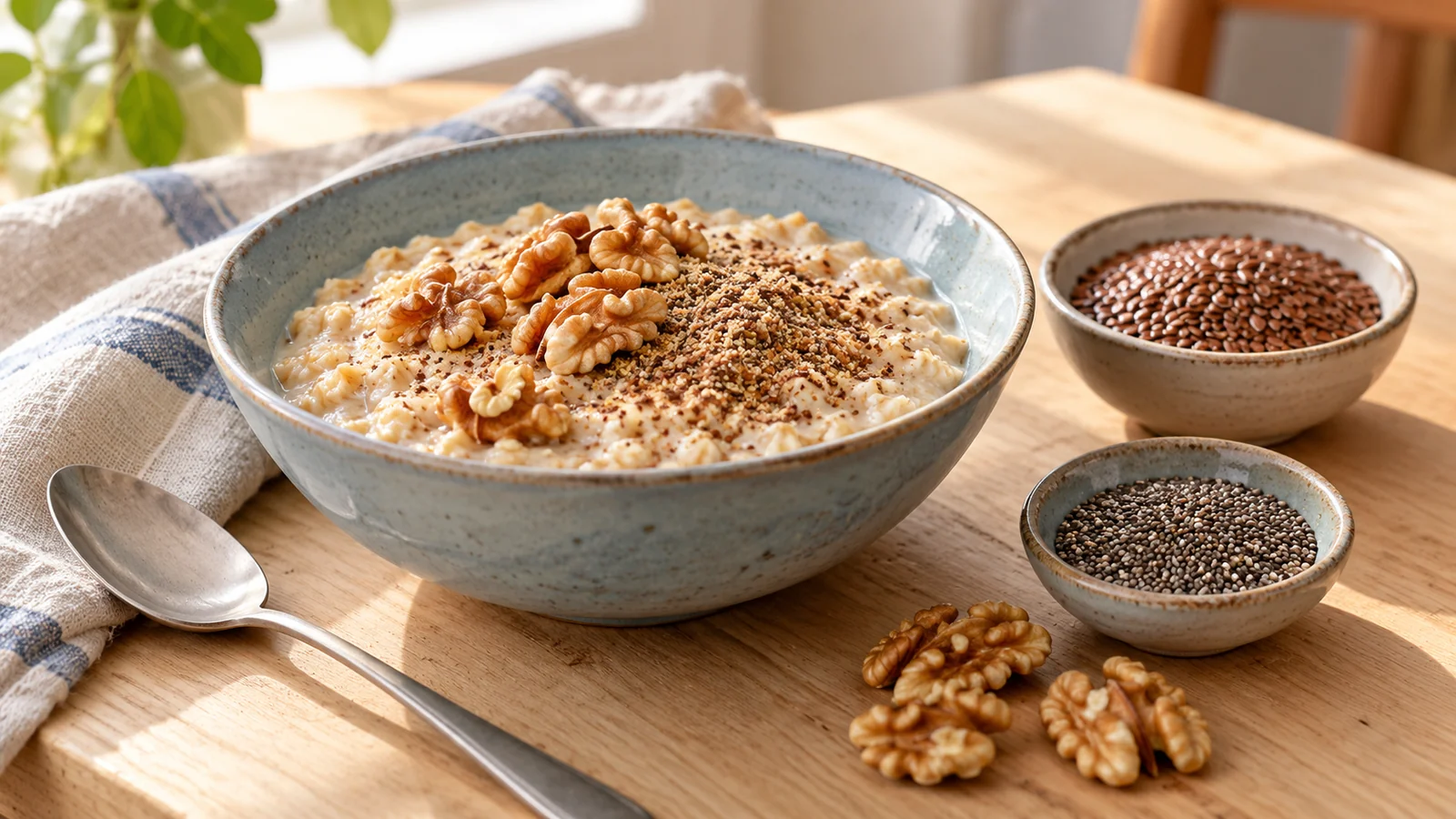
I would begin with something that fits the food you already enjoy, such as ground linseed in porridge or walnuts in a salad. You can keep the cooking familiar while getting clearer about what each food or supplement provides.
What are ALA, EPA and DHA?
These letters name different omega-3 fats. They are often grouped together on packaging, but a food providing ALA is not equivalent to the same amount of ready-made EPA or DHA. [1]
| Type | Full name | Sources to recognise |
|---|---|---|
| ALA | Alpha-linolenic acid | Walnuts, chia seeds, ground linseed and shelled hemp seeds |
| EPA | Eicosapentaenoic acid | Fish and some microalgae supplements |
| DHA | Docosahexaenoic acid | Fish and some microalgae supplements |
Plant food examples follow the Vegan Society's guidance; EPA and DHA sources are described in the NIH evidence summary. [1] [2] Check a supplement's label because some algae products provide DHA alone, while others provide both EPA and DHA.
DHA has an important role in brain and eye development. That role does not establish that taking extra capsules will improve everyone's memory or eyesight. [3]
Which plant foods provide omega-3?
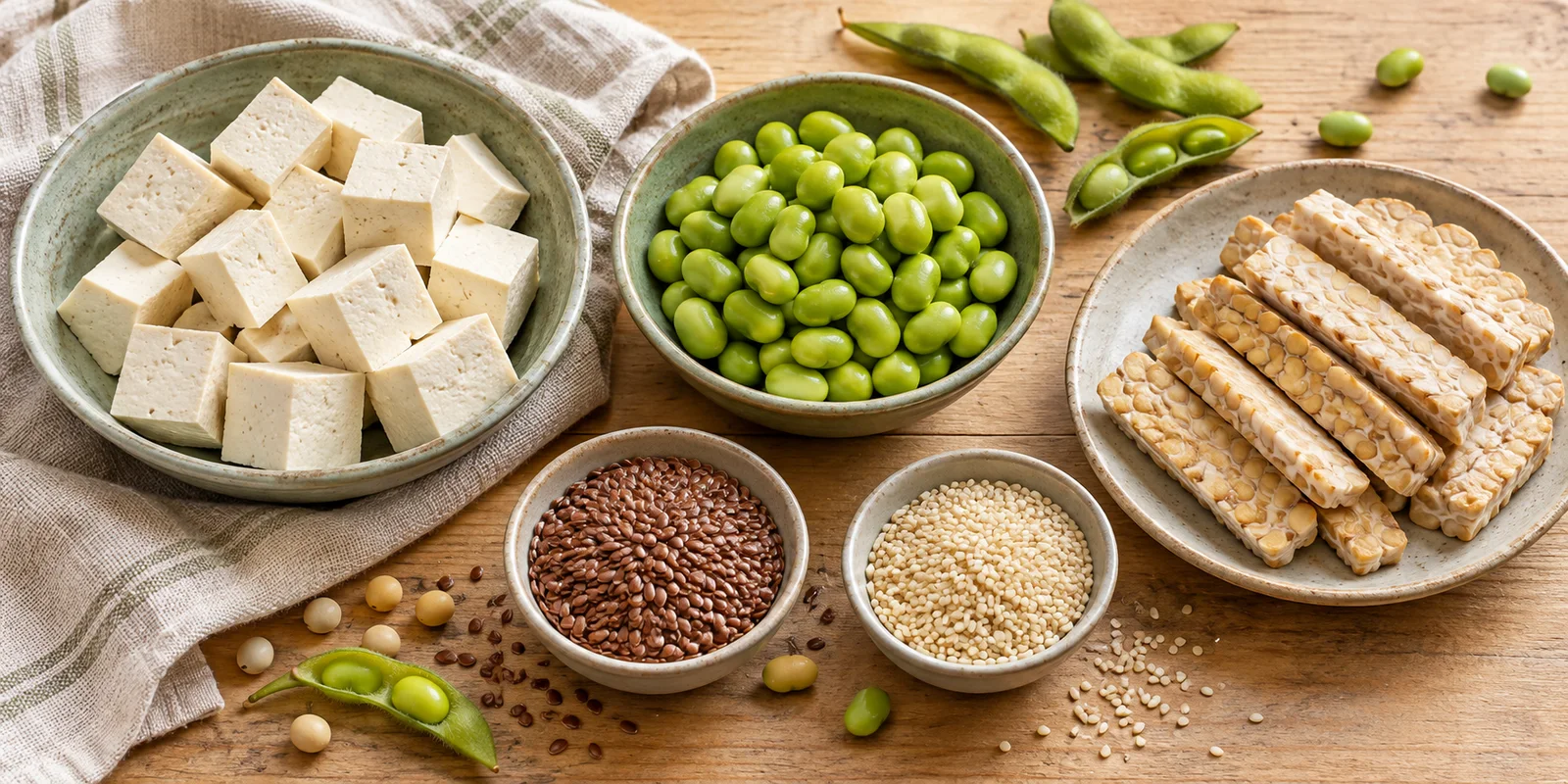
Ground linseed, also called flaxseed, chia seeds, walnuts and shelled hemp seeds are useful rich sources of ALA. Choosing nuts or seeds generally does not guarantee the same amount of omega-3: the type matters. [2]
I would choose a couple you enjoy and are likely to use. If walnuts do not suit you, look at suitable seed options rather than buying them because they appear in a suggested meal. Choose foods that fit your allergies, budget and usual cooking. Organic is optional.
Ground linseed is the form recommended in the Vegan Society's practical food suggestions. You can buy it milled or grind seeds yourself. Follow the storage instructions on the pack, and buy an amount you will use. [2]
How much omega-3 do I need?
For everyday ALA planning, the Vegan Society recommends:
“Make sure that your daily diet includes 1-2 rich sources of ALA”
The Vegan Society, Omega-3 fat [2]
This means thinking about a regular source, rather than an occasional garnish. Look at your usual portions and the product's nutrition information where available. I would give it a place in breakfast or another meal you eat regularly, so it is easier to remember.
Where does the 250mg figure come from?
For adults, the European Food Safety Authority sets an adequate intake of 250mg daily for EPA and DHA combined. That is a nutrition reference amount, not a treatment dose for a medical condition. It is also separate from the need for ALA. [4]
Dr Michael Greger suggests considering 250mg daily of algae- or yeast-derived long-chain omega-3 in his nutrient recommendations. This is clinician guidance, rather than proof that everyone benefits from a supplement. [5]
Advice about supplements is not identical everywhere. The BDA does not recommend omega-3 supplements routinely for the UK general population because evidence of health benefits is inconclusive. Someone eating no fish may still wish to consider a vegan algae product, with individual advice where needed. [3] The decision should take account of your diet and circumstances.
How can I use seeds and walnuts in meals?
You can include these foods without cooking with added oil. My approach would be to keep a useful ingredient where it is easy to reach and decide how you will use it before the week gets busy.
| ALA source | An everyday idea |
|---|---|
| Ground linseed | Stir into porridge or overnight oats |
| Chia seeds | Stir into a yoghurt alternative or an overnight breakfast mixture |
| Walnuts | Add chopped walnuts to a salad or scatter over breakfast |
| Shelled hemp seeds | Sprinkle onto oats or blend into a smoothie |
These ideas follow the Vegan Society's food guidance. [2] Adjust portions to your appetite and the rest of your meals. A mixture of seeds can be enjoyable, but check what it contains rather than assume every blend is rich in ALA.
If you prefer warm food in winter, porridge gives you somewhere familiar to start. If salads are more your thing, walnuts may fit more naturally there. You do not have to add all four foods every day. For a broader look at meal planning, use the balanced plant-based diet guide alongside this one.
What does an algae supplement provide?
Microalgae supplements can provide pre-formed EPA or DHA, meaning these fats are supplied directly rather than relying on conversion from ALA. The EPA and DHA in fish originally come from microalgae through the food chain. An algae product offers a fish-free source; check that the whole product is suitable for vegans. [1] [3]
ALA-rich food still belongs in your plan. Deciding to take EPA or DHA does not turn walnuts and seeds into unnecessary foods, or make a capsule a replacement for a varied diet.
Does an algae supplement change omega-3 levels?
A randomised crossover trial by García-Maldonado and colleagues included 116 adults eating vegan, vegetarian or omnivorous diets. Participants received 250mg of DHA daily from microalgae or a placebo during five-week periods, separated by a five-week break. DHA in the blood increased with the supplement in all three diet groups. [6]
The researchers concluded that the supplement was:
“effective in increasing serum DHA”
García-Maldonado and colleagues, European Journal of Nutrition [6]
Serum means the liquid part of blood used for the measurement. This shows that the tested product supplied DHA that reached the bloodstream. It does not demonstrate that taking it prevents heart attacks, improves memory or produces the same result in every age group. Those are different outcomes requiring their own evidence. [6]
How do I compare omega-3 supplement labels?
Look at the amounts of EPA and DHA per daily serving, rather than just the total amount of oil. Products vary, and a large oil quantity on the front of a bottle does not establish how much EPA or DHA it contains. [1] Check how many capsules make up the stated serving.
For example, a daily serving listing 100mg EPA and 150mg DHA supplies 250mg combined. That is a worked example, not a recommendation for a particular brand. A product providing ALA alone is different from one providing EPA and DHA.
Check the full ingredients, suitability for your diet, storage instructions and expiry date. If you already take another omega-3 product, include it when reviewing the total. A pharmacist or dietitian can help if the labels leave you unsure.
Does taking more omega-3 protect your heart?
Omega-3 nutrition matters, but supplement claims need care. A 2020 Cochrane review included 86 randomised trials involving 162,796 people. Increasing EPA and DHA had little or no effect on overall deaths and cardiovascular events, while there was evidence of small reductions in some coronary outcomes and reduced triglycerides, a type of blood fat. Certainty varied between outcomes. [7]
Many trials used supplements, with different doses and populations. The review does not show that every algae capsule prevents disease, nor that essential omega-3 fats are unimportant. It helps separate meeting nutrition needs from expecting a supplement to provide broad protection. [7]
If you have heart disease or high triglycerides, ask your healthcare team about treatment. A shop-bought product should not replace prescribed medicines or an individual care plan. [9]
What about pregnancy, breastfeeding and children?
DHA has an important role in brain and eye development, so discuss omega-3 with your midwife or dietitian if you are pregnant, breastfeeding or planning food for a child. EFSA guidance includes additional DHA during pregnancy and breastfeeding; an adult general-use product should not automatically be treated as the right choice for every life stage. [3] [4]
A 2018 Cochrane review of 70 trials involving 19,927 women found fewer preterm and very preterm births with additional long-chain omega-3. It also found an increased likelihood of pregnancy continuing beyond 42 weeks. The studies used different interventions and were not a test of one particular vegan product. [8]
That research supports a useful conversation about your needs, rather than copying a high dose from another person's pregnancy plan. Bring the label of any prenatal supplement you already take so the advice can account for what it provides.
When should I ask for advice before taking a supplement?
Ask your doctor or pharmacist if you take blood-thinning medicine, have a heart rhythm condition or are considering high-dose EPA/DHA. Research in people with heart disease or risk factors has linked higher-dose supplements with an increased risk of atrial fibrillation, an irregular heart rhythm. This is not a reason to avoid ordinary portions of walnuts or seeds. [9] [1]
More is not automatically better. Use a dose suited to your situation and keep prescribed treatment under your clinician's guidance. If a supplement causes problems, ask about the product and dose instead of adding more products to compensate.
A few more questions about omega-3
Do I need to eliminate omega-6?
No. Omega-6 includes essential fats too. EFSA did not set a specific omega-6 to omega-3 ratio as a dietary reference value. [4] I would focus on including a dependable ALA source and a varied diet, rather than trying to remove every food that contains omega-6.
Can I use seaweed instead of an algae capsule?
They are not interchangeable. EPA and DHA in seaweed vary, and some seaweeds can supply excessive iodine. A measured microalgae product is different from an unspecified spoonful of seaweed. [9] The iodine guide explains why relying on seaweed needs care.