Zinc helps your immune system work properly and supports wound healing. It is also needed for growth and your senses of taste and smell. Everyone needs this mineral, whether they eat meat, are trying a few plant-based meals or have eaten entirely plant-based for years. [1]
Zinc
Supports wound healing and immune function
Find it in
- Beans
- Wholemeal bread
- Nuts
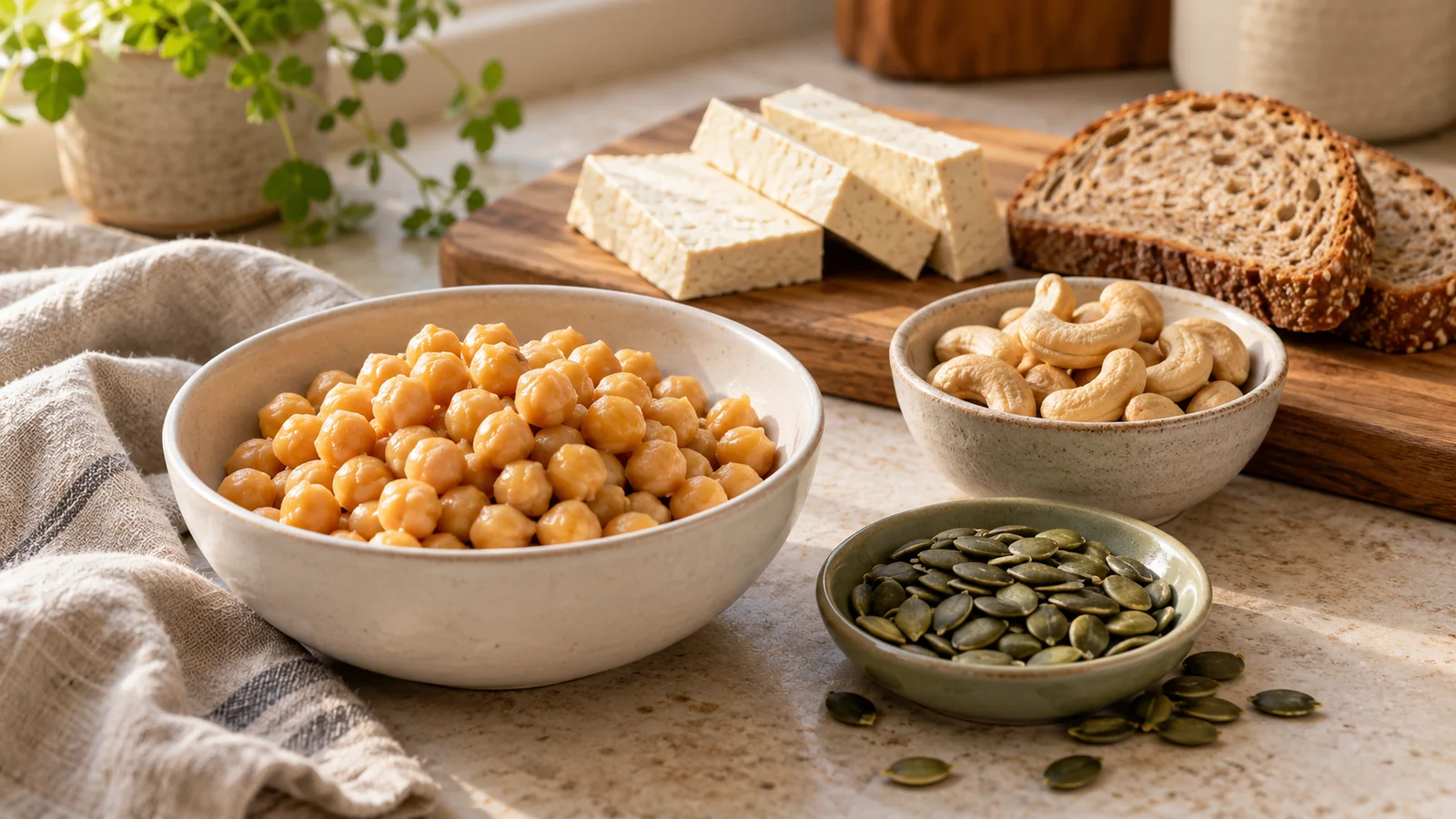
Use a mixed-bean filling in a wholemeal sandwich.
Sources [11] [2]You can get zinc from plant foods, including beans, whole grains, tofu, nuts and seeds. Absorption deserves some attention, though: the amount in a food is not necessarily the amount your body takes in. [2] [5] That gives you something useful to work with when choosing and preparing meals.
I would start by looking at the foods you already enjoy. A lentil stew, a tofu dish or a slice of wholemeal bread can give you somewhere familiar to begin. You do not need to turn every dinner into a calculation.
How much zinc do UK adults need?
The usual UK daily reference amounts are 7mg for adult women and 9.5mg for adult men. These are amounts from your diet, not instructions to buy a tablet containing that dose. [3]
| Group | Daily amount |
|---|---|
| Adult women | 7mg |
| Adult men | 9.5mg |
The Vegan Society uses these UK figures in its plant-based guidance. [2] If you come across different numbers on American websites, their reference system differs. Keep the country and life stage in mind when comparing advice. [4]
For someone whose diet contains a lot of phytate, a compound in foods such as grains and pulses, the amount of zinc absorbed can be lower. [5] A dietitian can help assess your needs if your food choices are restricted or you are worried about getting enough. I would use the reference amounts alongside a look at your actual meals, rather than assume one number settles every question.
Which plant foods provide zinc?
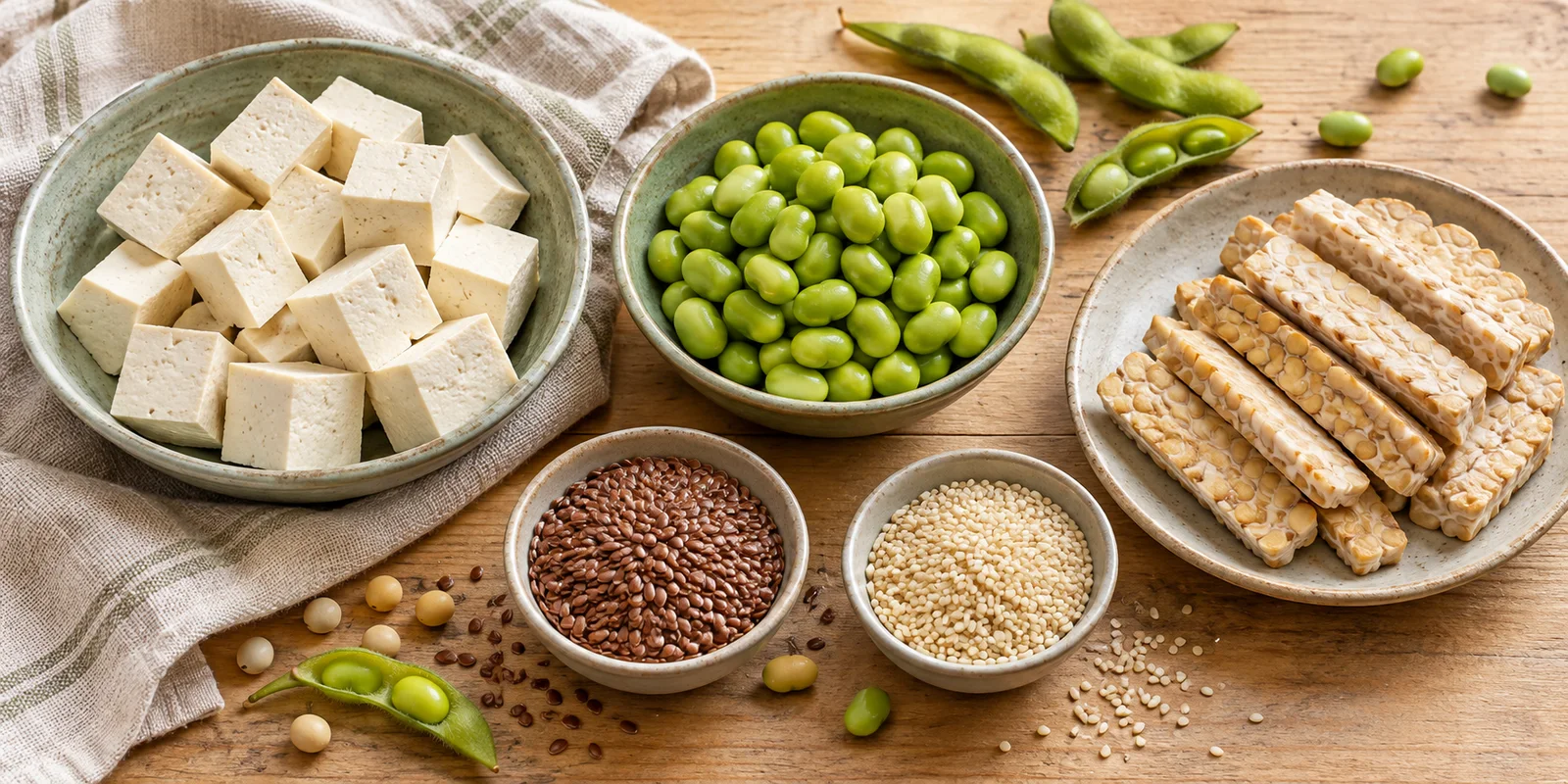
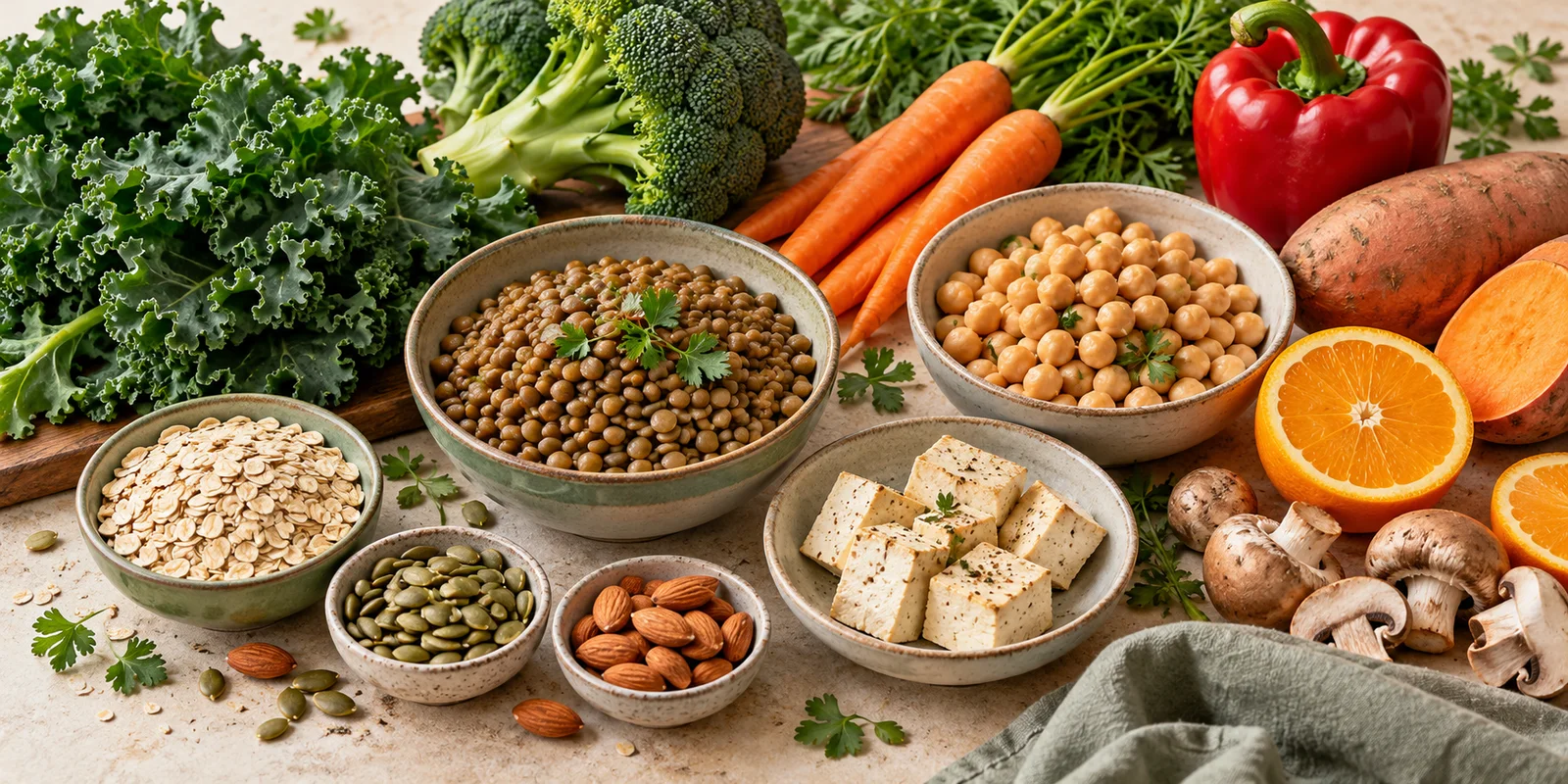
Useful options include pulses, whole grains, tofu, tempeh, nuts and seeds. Some breakfast cereals have added zinc, but you need to check the label. [5] Pulses means foods such as beans, chickpeas and lentils.
| Food | An idea to try |
|---|---|
| Beans, chickpeas and lentils | Add to a curry, soup or stew |
| Tofu or tempeh | Use in a vegetable stir-fry or noodle bowl |
| Wholemeal bread and other whole grains | Build breakfast or lunch around a food you enjoy |
| Nuts and seeds | Scatter suitable choices over porridge or a salad |
| Cereals with added zinc | Compare the amount per serving on the pack |
The food groups follow the dietary review by Saunders and colleagues; the meal suggestions are ideas to adapt, not calculated zinc totals. [5] The portion you eat matters, so a small sprinkle should not be treated as a guarantee that you have met your whole day's needs.
Pick ingredients that fit your budget and any allergies. I personally like organic food, but ordinary supermarket beans, grains and other suitable choices belong here too. Buying organic is optional. I would rather help you find meals you can keep making than leave you with an expensive shopping list.
What helps my body absorb zinc?
Phytate can bind to zinc in the digestive tract and reduce absorption. It occurs in many of the plant foods that supply zinc, which is why preparation can make a difference. Soaking before cooking and fermentation are among the approaches used to improve availability. Tinned and pre-cooked foods are practical options too. [4]
You do not need to soak every ingredient or make everything from scratch. If tinned chickpeas make dinner possible on a busy evening, use them. When preparing dried pulses, follow the pack's soaking and cooking instructions. I would choose a routine you can manage before adding extra kitchen jobs.
Why does bread-making matter?
A human absorption study by Nävert and colleagues examined breads containing bran. Allowing the dough to rise reduced phytate, and zinc absorption increased with longer fermentation in the tested breads. [6] This helps explain why leavened wholemeal bread, made with yeast or a sourdough culture, can be useful.
The study measured absorption from particular breads. It did not prove that every sourdough loaf provides the same amount of absorbable zinc or prevents deficiency. [6] Choose bread you enjoy and can eat safely; it is one option among several.
Should I sprout beans or seeds?
Sprouting can help reduce the effects of phytate, but food safety needs care. [5] Raw sprouts can carry harmful bacteria. Follow the label, cook sprouts if you are unsure, and avoid raw sprouts during pregnancy or if you have a weakened immune system. Older people and very young children are also more vulnerable. [7]
There is no need to start home sprouting to plan a plant-based diet. Cooked pulses and other familiar ingredients give you plenty to work with.
How can I build zinc into meals?
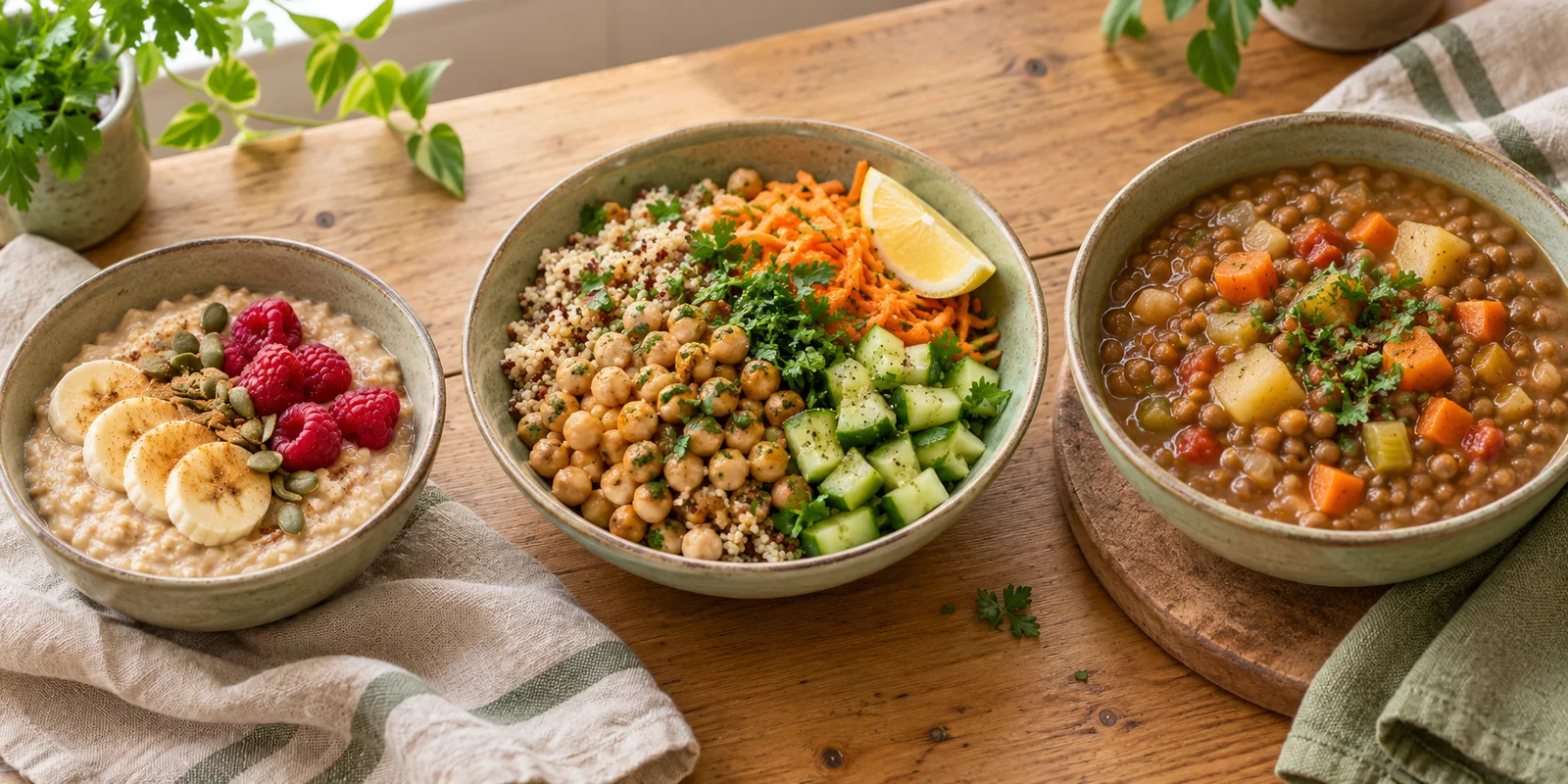
I find planning much more helpful than trying to remember every nutrient while cooking. Write down a few meals for the week and look for places to include the foods above. You might choose porridge with suitable nuts or seeds for breakfast, bean soup with wholemeal bread for lunch, and tofu with vegetables for dinner.
In summer, try adding chickpeas to a colourful salad. In winter, make lentils part of a warming stew. If you enjoy noodles, a tofu and vegetable bowl may be a more appealing place to start. You can prepare these ideas without added cooking oil, using a method that suits the dish.
Batch cooking can help with the practical side. Decide which meal you want ready for a busy day, then shop for that meal's ingredients. You could make a lentil-based dish for dinner and plan another meal around the remaining ingredients. Follow appropriate storage and reheating instructions for the foods you prepare.
These are meal-planning suggestions, rather than a menu certified to meet everyone's requirements. If you want help with the rest of your plate, the balanced plant-based diet guide looks at the wider picture.
What does research on plant-based diets show?
A 2013 systematic review by Foster and colleagues included 34 studies, with 26 contributing to its pooled comparisons. Vegetarian groups had lower average zinc intakes and blood zinc concentrations than non-vegetarian groups. Definitions of vegetarian diets varied, making comparisons more difficult. [8]
The authors identified:
“Dietary practices that increase zinc bioavailability”
Foster and colleagues, Journal of the Science of Food and Agriculture [8]
They discussed these practices, fortified foods and low-dose supplementation as possible approaches for people with low intakes or low zinc status. Group averages cannot diagnose an individual reader. The findings support paying attention to zinc, while leaving room to assess what a particular person eats and needs. [8]
Dr Michael Greger's NutritionFacts.org has a zinc topic page discussing plant sources and phytate. The topic summary is credited to volunteers, so I would read it as educational background alongside the original studies and dietetic guidance. [9] A familiar name can help you discover a question; checking the evidence helps answer it.
Could I be low in zinc?
Possible signs include poor appetite, changes in taste or smell, slow wound healing and frequent infections. These can have other causes, so noticing one does not establish a zinc deficiency. [1] If a change persists, speak to your GP rather than trying to diagnose it from a food list.
Blood zinc tests also have limits. Results can change with infection, the time of the blood draw and other factors; clinicians consider symptoms and risk factors alongside them. Digestive conditions or previous bariatric surgery can make zinc adequacy more difficult. [4]
It may help to bring a short record of your usual meals and any supplements to the appointment. Include what you actually eat on busy days, too. That gives a dietitian something more useful to discuss than a list of foods you feel you should be eating.
Do I need a zinc supplement?
A varied plant-based diet can provide enough zinc, so a supplement is not an automatic requirement. [2] It may be useful when food intake or absorption is inadequate, with advice tailored to the cause. [8] This differs from B12 planning, which needs its own reliable source on a fully plant-based diet.
Check the zinc amount per daily serving and include any multivitamin you already take. Ask a pharmacist about combining products, particularly if you take medicines: zinc can interfere with certain antibiotics and penicillamine. [4]
UK advice is to avoid taking more than 25mg of zinc supplements a day unless a doctor advises it. This is a supplement safety limit, not a daily target. Too much zinc can reduce copper absorption and lead to problems including anaemia. [3]
If someone recommends a high dose, ask what it is intended to treat, how long to take it and when it will be reviewed. That is a more useful conversation than choosing the strongest product on the shelf.
Does zinc help with colds?
Zinc supports normal immune function, but that does not mean extra zinc reliably stops a cold. [1] A 2024 Cochrane review assessed 34 studies involving 8,526 people. Preventive use appeared to make little or no difference to the risk of developing a cold. Treatment after a cold began may have shortened it by about two days, with low confidence in that finding. [10]
“Our confidence in the evidence is mostly low to very low”
Cochrane, Zinc for the prevention and treatment of the common cold [10]
Treatment also caused more non-serious side effects, particularly an unpleasant taste and stomach upset. Products, doses and methods differed between trials. [10] I would discuss a cold remedy with a pharmacist rather than copy a trial dose or add it to several other zinc products.
What about pregnancy, breastfeeding and children?
Zinc supports growth and development. Pregnancy, breastfeeding and childhood need age- and life-stage-specific planning, so the adult figures above should not be used as a child's supplement dose. [1] If you are planning a child's diet or are pregnant, ask your dietitian or maternity team to review the whole diet and any supplements together.
Take the products or photographs of their labels with you. Explain any allergies, foods you avoid or difficulties eating enough. That makes it easier to find an approach that fits your family.
Where would I start?
Choose one meal you eat regularly and look for a zinc-containing food you would enjoy there. Perhaps that is beans in a soup, tofu in a curry or seeds over breakfast. Put it on your shopping list and decide when you will use it.
Once that feels familiar, look at another meal. If the choices feel limited or you have symptoms that concern you, get individual help. You can work on your food habits at a manageable pace while asking for support where you need it.