Calcium helps keep your bones and teeth healthy, and has everyday jobs in muscle contraction and blood clotting too. Everyone needs it, whether they eat dairy, avoid it or are beginning to eat more plants. [1]
Calcium
Supports bones, muscles and nerves
Find it in
- Calcium-set tofu
- Calcium-fortified drinks
- Kale or bok choy
Check the tofu packet and drink label for calcium.
Sources [13] [1]Milk is often the first food that comes to mind when we think about calcium. If you're thinking of removing dairy, you might wonder where your calcium will come from. There are other ways to get enough, including calcium-set tofu, greens such as kale and pak choi, and fortified plant drinks. A little planning helps you choose foods and portions that cover your needs, taking account of how well their calcium is absorbed. [2] [3]
I want to make that planning feel manageable. You can start by checking a few foods you already buy, then find ways to use them in meals you enjoy. Organic is a personal choice, and affordable non-organic ingredients are welcome here.
How much calcium do I need each day?
For most UK adults, the recommended intake is 700 milligrams, written as 700mg, a day. This is the total from what you eat and drink, plus any supplement you have been advised to take. It is not a recommendation to add a 700mg tablet to your food. [1]
Needs differ during childhood and adolescence, and while breastfeeding. The Vegan Society lists 1,250mg daily during breastfeeding. If you are planning food for a child, are breastfeeding or have been given a particular target for a medical reason, get advice suited to that situation. This guide focuses on everyday eating for adults. [2]
You may see higher figures on American websites: the US reference intake for adults aged 19 to 50 is 1,000mg. These are different national recommendations. For a UK starting point, use the UK guidance unless your healthcare team has advised otherwise. [10] [1]
Which plant foods provide calcium?
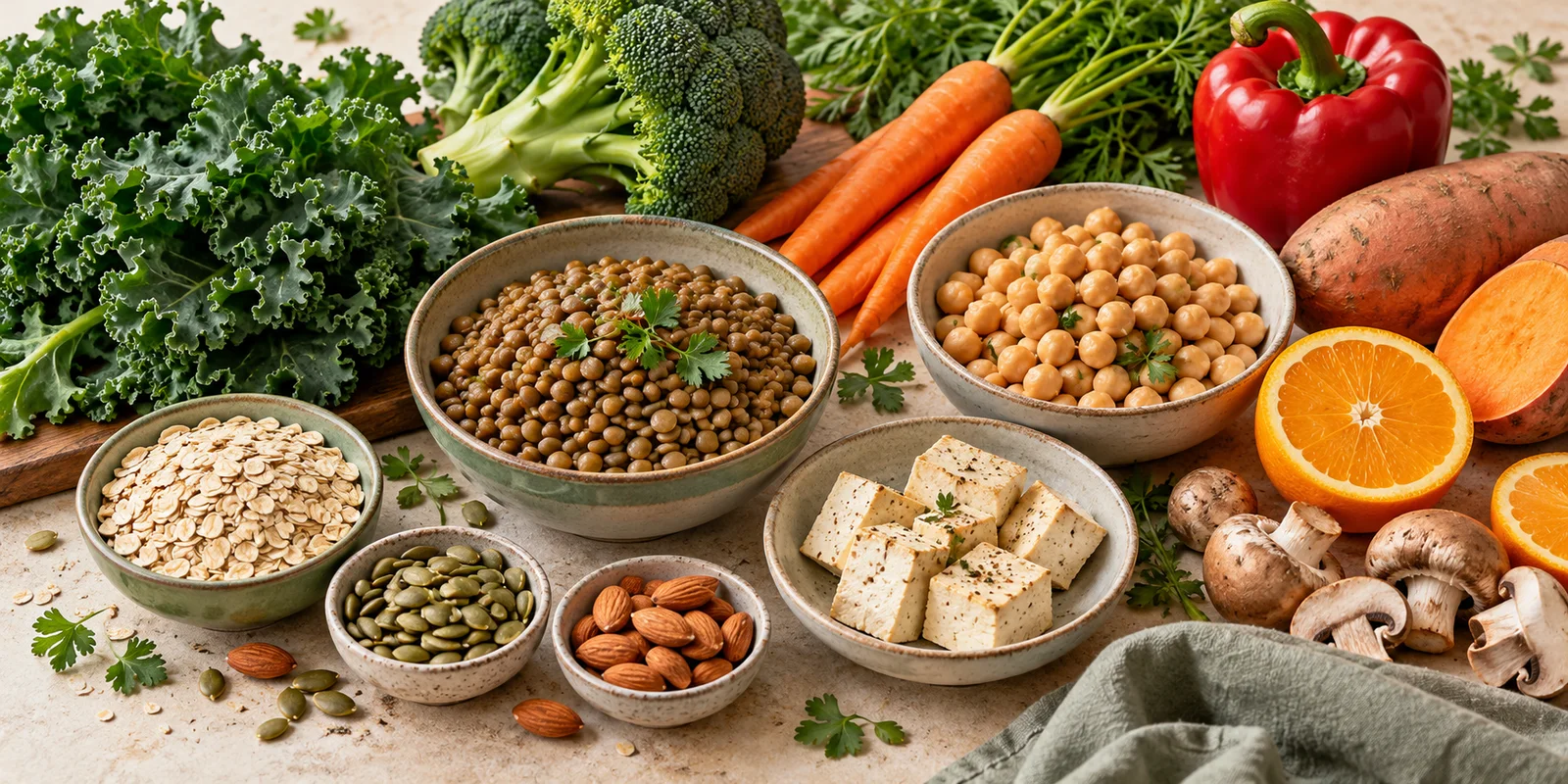
Useful choices include calcium-fortified plant drinks and yoghurts, calcium-set tofu, kale, watercress and okra. Tahini, beans, almonds and dried figs can contribute too. Including different foods gives you more ways to cover your needs than depending on one favourite ingredient. [3]
The amounts below are approximate examples from the Royal Osteoporosis Society's food chooser. Check packaging where available, especially for drinks and tofu, because products differ. Your own portion may also be larger or smaller. [4]
| Food | Example portion | Approximate calcium |
|---|---|---|
| Calcium-fortified plant drink | 200ml | 200mg |
| Calcium-set tofu | 100g | 200mg |
| Boiled kale | 80g | 200mg |
| Pak choi | 125g | 100mg |
| Tahini | 15g | 100mg |
| Chickpeas | 150g | 100mg |
| Almonds | 30g | 100mg |
A sprinkle of seeds or splash of plant drink might be enjoyable, but check how it compares with the portion in the table. I would look at the amount you actually use before deciding that a food covers a large part of your day's calcium.
How do I check a label?
Look for calcium in the nutrition information, usually given in milligrams per 100g or 100ml. For example, if a drink lists 120mg per 100ml, a 200ml glass provides 240mg. This is a calculation from an example label, not a value that applies to every carton.
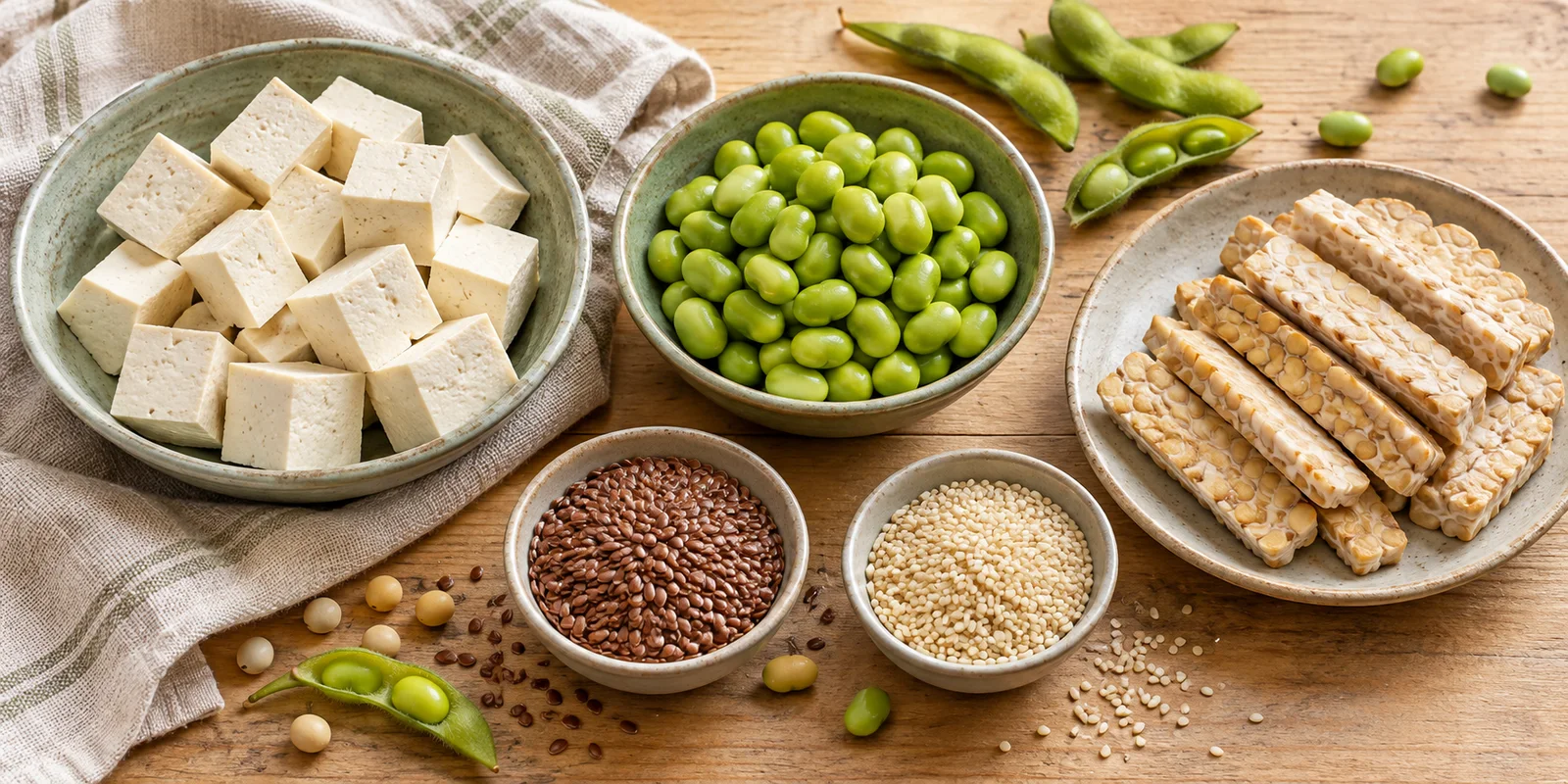
On tofu, look for a calcium coagulant such as calcium sulphate or calcium chloride, then check the calcium amount if it is provided. These ingredients help the soya mixture set. Tofu made with other coagulants should not automatically be counted as equivalent. [5]
Can my body absorb calcium from plants?
Yes, although absorption varies between foods. Calcium from calcium-set tofu, fortified foods and greens such as kale, broccoli and pak choi is well absorbed. Spinach contains calcium, but compounds called oxalates bind much of it, making it less available to your body. Almonds and sesame seeds also have lower calcium absorbability than some greens and fortified foods. [3]
You can still enjoy spinach. I would simply choose other foods to do more of the work in your calcium plan, rather than expecting a large spinach salad to cover it.
Dr Michael Greger draws attention to greens on NutritionFacts.org:
“Dark green leafy vegetables, like kale, broccoli, and bok choy, are relatively rich in calcium”
Dr Michael Greger, NutritionFacts.org [6]
The amount in a normal portion still matters. A food can have well-absorbed calcium without supplying a large amount in the serving you eat. I would use greens alongside other sources rather than treating a few broccoli florets as a complete plan.
What has research found about tofu?
Two crossover studies reported by Weaver and colleagues compared calcium-set tofu with milk in healthy premenopausal women. A crossover study lets participants try the different foods at separate times. The researchers measured calcium absorption, and reported that:
“calcium absorption was similar between calcium-set tofu and milk.”
Weaver and colleagues, Journal of Food Science [5]
This supports calcium-set tofu as a useful source. It does not show that every tofu product supplies the same amount, or that eating tofu alone prevents osteoporosis. The study measured absorption, rather than long-term fracture outcomes. [5]
How can I build calcium into meals?
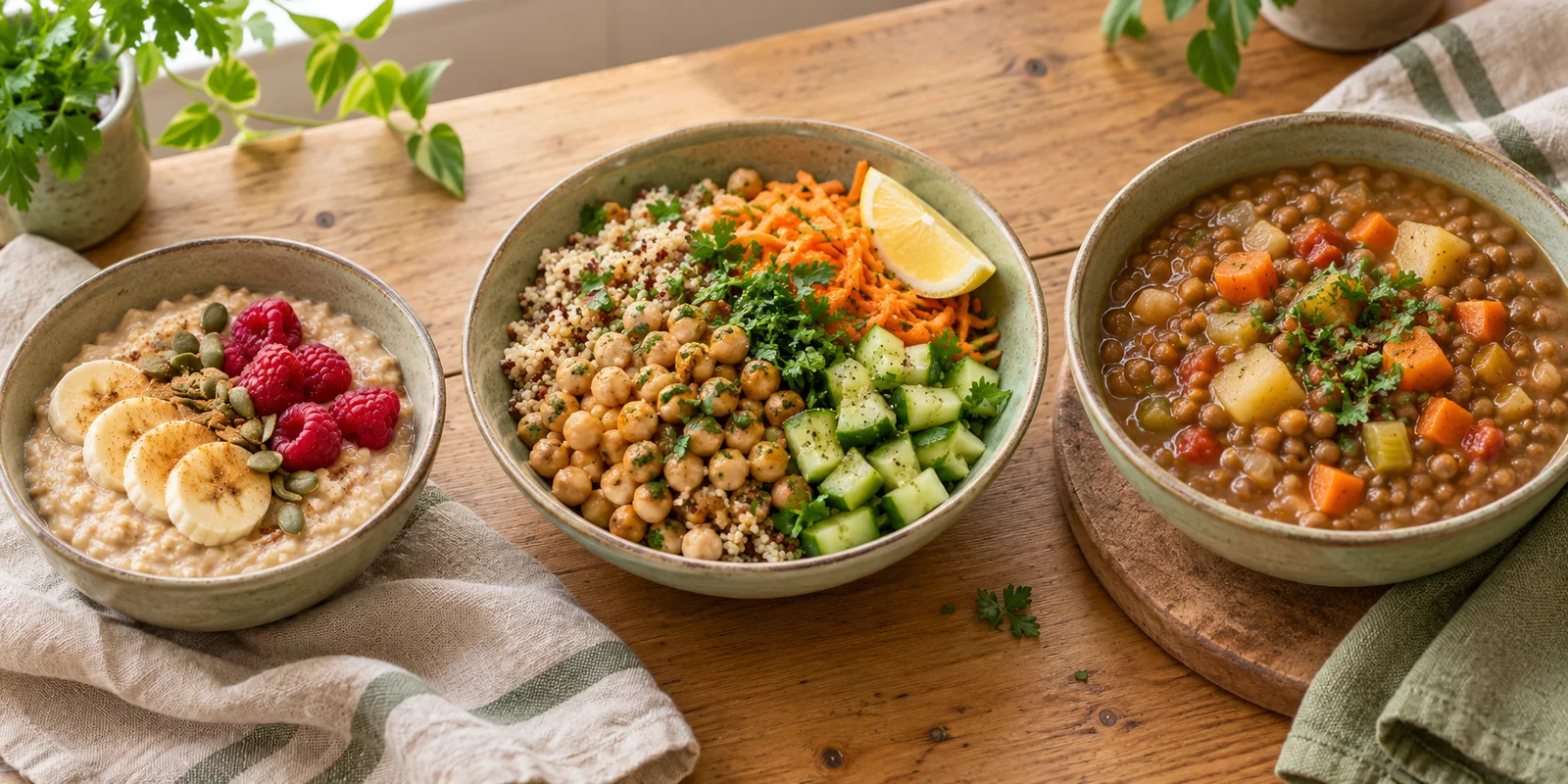
I would start with your usual breakfast and dinner, then check lunch and snacks. You might use a fortified drink in porridge, calcium-set tofu in a curry or ramen, and kale or pak choi with a main meal. These are meal ideas to adapt, rather than a fixed menu you have to follow.
As a rough example, two 200ml portions of a fortified drink and 100g of calcium-set tofu would provide about 600mg using the food chooser's estimates. Other foods would need to supply the remainder towards a 700mg target. Use your own product labels to check your version. [4]
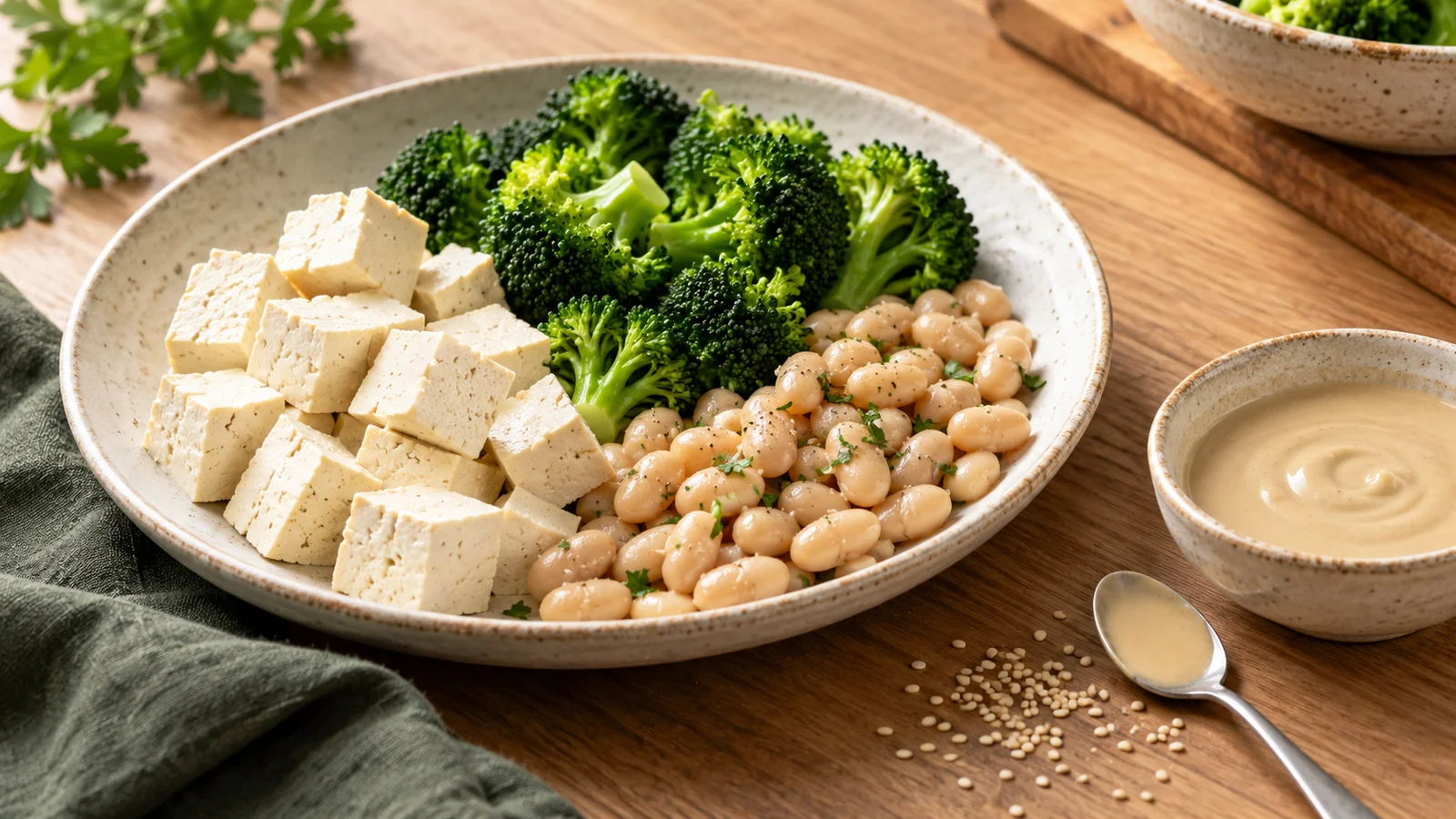
If you prefer unfortified drinks, give the rest of the day a closer look. You could try a tofu lunch, greens with dinner and a tahini dressing, then check the amounts. A dietitian can help if you are unsure whether the combination meets your needs.
Planning is key for me. Put the calcium foods you intend to use on your shopping list, and think about when you will eat them. If the greens you bought keep getting left in the fridge, choose another option you enjoy or plan them into a soup or stew. The balanced plant-based diet guide can help you fit this into the rest of your meals.
What does bone-health research tell us?
Calcium planning deserves attention on a plant-based diet. In the observational EPIC-Oxford study, researchers followed people in different diet groups for an average of 17.6 years. The vegan group had a higher hip-fracture risk than meat eaters, equivalent to about 15 additional cases per 1,000 people over ten years after adjustment for factors including body mass index. [7]
This was not a trial assigning people to diets. Differences became smaller, but remained, after further adjustment for calcium and protein intake. It cannot establish that avoiding dairy caused the fractures, or that calcium alone explains the results. The practical message is to pay attention to bone health, including adequate nutrition, rather than assume a diet label guarantees protection. [7]
Plant-based clinicians also discuss the broader picture. Orthopaedic surgeon and lifestyle medicine physician Rajiv Bajekal and registered dietitian Lisa Simon cover dietary calcium alongside movement in their Plant-Based Health Professionals UK bone-health resource. It is educational guidance, rather than a trial of one particular diet. [8]
Why do vitamin D and movement matter too?
Vitamin D helps your body absorb calcium. For UK adults, consider a daily 10-microgram vitamin D supplement during autumn and winter. Some people need to consider it throughout the year, including those with little sun exposure or darker skin. Choose a preparation suitable for your diet, and follow individual medical advice if you have it. [9]
Bones also respond to how you use them. Weight-bearing activity, where your feet and legs support your weight, and resistance exercise that works your muscles both matter for bone health. If you have osteoporosis, previous fractures or other health concerns, ask your healthcare team which activities are appropriate before beginning a new exercise programme. [11]
Do I need a calcium supplement?
You may need one if food is not providing enough or your healthcare team recommends it. A supplement should address your situation and intake; it is not something everyone eating plant-based automatically needs. If you have osteoporosis, your care team may recommend calcium and vitamin D alongside other treatment. [3] [12]
Bring a few days of food notes and the labels of any supplements you already take to a pharmacist or dietitian. Ask how much, if any, extra calcium you need. Count combined products too, so you do not unintentionally duplicate them.
Calcium supplements can interfere with medicines, including levothyroxine and some antibiotics, so ask a pharmacist about timing. More is not automatically better. Follow prescribed treatment and get advice before adding or replacing products, particularly if you have kidney disease or a history of kidney stones. [10]
More questions and advice for your situation
Does a normal calcium blood test mean I eat enough?
Not necessarily. Blood calcium is tightly regulated and does not reliably show whether your usual calcium intake is adequate. Discuss food intake and any bone-health concerns with your clinician rather than using that one result to judge your diet. [10]
Can calcium foods replace osteoporosis treatment?
A calcium-rich diet can support bone health, but it should not replace prescribed osteoporosis treatment. Treatment decisions depend on factors such as fracture risk, previous fractures and your medical history. Ask your healthcare team how food, supplements and medicines fit together for you. [12]
What is a useful first step today?
Check one food you regularly buy. If it is plant milk, look for calcium on the label. If it is tofu, check what it is set with and how much calcium is listed. Then decide where that food fits into a meal. You can build on that without changing every ingredient in your kitchen at once.